Odoo, connected to everything.

Real-time data across your stack — e-commerce, CRM, payments, EDI, BI. Retry logic, observability, and failure handling baked in.
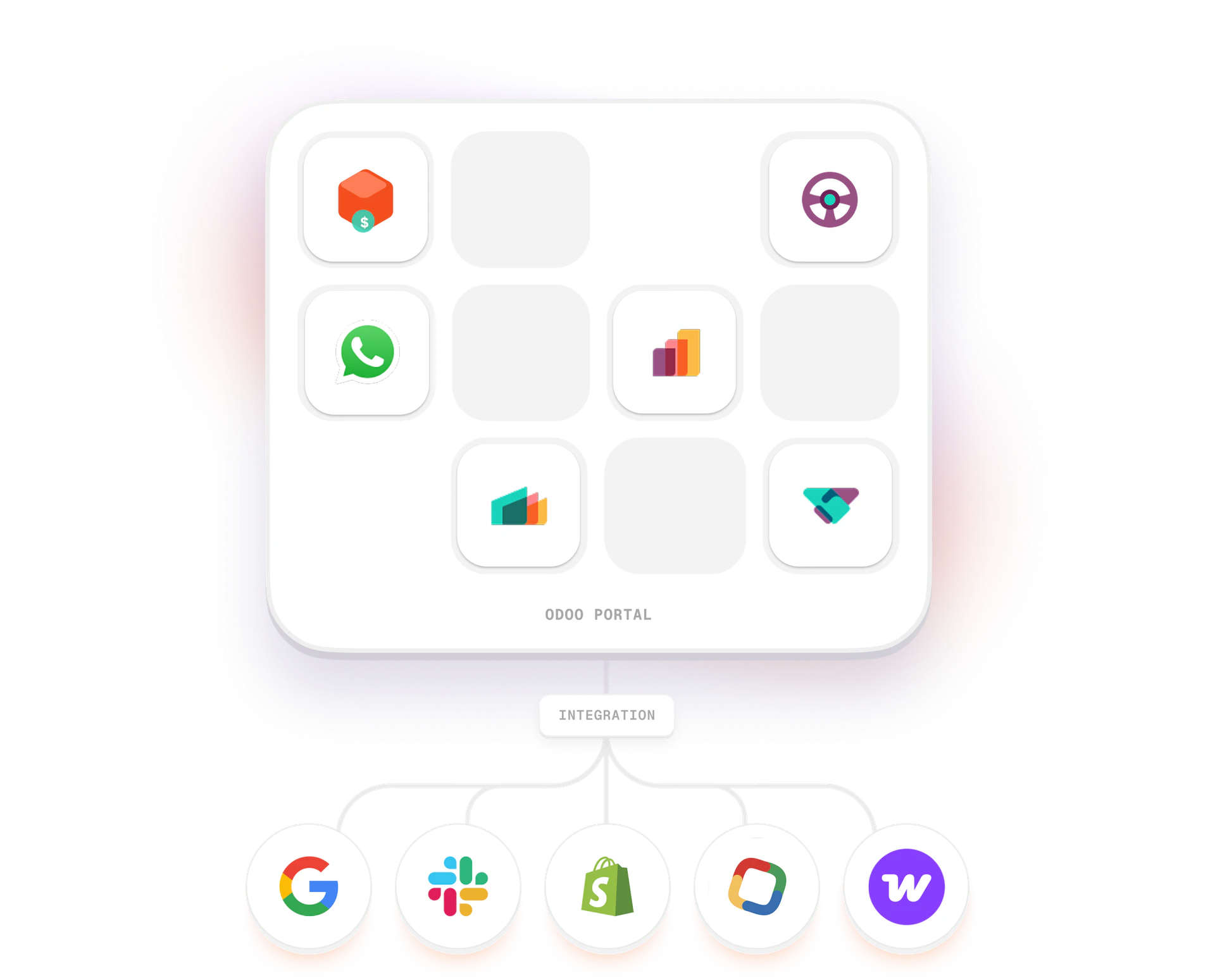
Why integrations are where most ERP projects silently fail.

The difference between a good integration and a bad one isn't whether data flows — it's whether it keeps flowing when something goes wrong. API changes, network blips, malformed records, auth rotations. Any integration that doesn't handle these silently drops data.

Every integration we build has typed contracts, exponential-backoff retry, dead-letter queues with alerting, and observability on latency and error rates. Standard ecosystem (Shopify, Salesforce, Stripe, EDI) or 1995-vintage legacy — same pattern.

— Integrations

Systems we connect daily.

E-commerce

Shopify, Magento, WooCommerce, BigCommerce.

CRM systems

Salesforce, HubSpot — two-way sync.

Payments

Stripe, Adyen, Authorize.Net — card and ACH.

Logistics

FedEx, UPS, DHL, Shippo, Shipstation.

EDI networks

AS2, SFTP, Ariba, Coupa.

Analytics

Fivetran, Airbyte, Snowflake, BigQuery.

— Honest fit

How to think about integrations.

Build an integration when

  • Data genuinely flows between systems in both directions
  • Real-time or near-real-time sync provides measurable value
  • The external system has a stable, documented API
  • Ongoing maintenance budget is realistic

Don't build an integration when

  • A daily CSV export would be sufficient
  • The external tool will be replaced within 12 months
  • Nobody has designed the actual contract between the two systems
  • The external vendor's API is poorly documented or frequently breaks
— Our methodology

How we deliver Odoo — structured, rehearsed, rollback-tested.

Every Odoo engagement we take on runs through the same seven-phase delivery methodology — structured discovery, parallel configuration and data migration, rehearsed cutovers with tested rollback paths, role-based training, and 4-8 week hypercare. Refined across 50+ implementations including one of our largest engagements to date.

Read the methodology
— Questions

Integration questions.

How do you handle integration failures?
Every integration has retry logic (exponential backoff with jitter), dead-letter queues for records that fail repeatedly, alerting to Ops when the DLQ exceeds a threshold, and a replay mechanism so ops can fix data problems and retry failed records. Failures don't silently drop — they're visible, triaged, and fixed.
Real-time or batch?
Depends on the data. Orders, inventory, and payment events are usually real-time via webhooks or event streams (Kafka, Redis pub-sub). Financial postings often batch with validation windows so anomalies can be caught before they hit GL. Master data sync can be scheduled (hourly or daily). We choose based on data velocity and consequence of staleness.
Do you maintain integrations post-build?
Yes — under support retainer. Every Shopify API update, Stripe SDK release, and HubSpot breaking change gets handled by us rather than surfacing in your ops team's Monday morning. Retainer includes proactive monitoring and version upgrades.
Can you integrate with our legacy system?
Almost certainly. We've integrated Odoo with AS/400 systems via IBM WebSphere MQ, mainframe flat-file outputs, COBOL batch jobs wrapped in modern APIs, and SOAP services from the 2000s. Legacy isn't a blocker — just a different set of patterns.
What about GDPR and data residency?
Integration architecture respects data residency rules. For EU-only data, we keep processing in EU regions (Odoo.sh EU, AWS eu-west, etc.). For cross-border transfers we configure under Standard Contractual Clauses or equivalent legal basis.
Can you build a custom integration from scratch?
Yes. For systems without off-the-shelf connectors we design the integration from scratch: API contract, data model, error handling, retry policy, observability. Custom integrations come with the same upgrade-safety guarantees as any other code we write.

Odoo and your other systems — talking?

30-min call. We map endpoints, retry, observability — and give you a fixed-fee scope. No discovery contract required.

Scope an Odoo integration